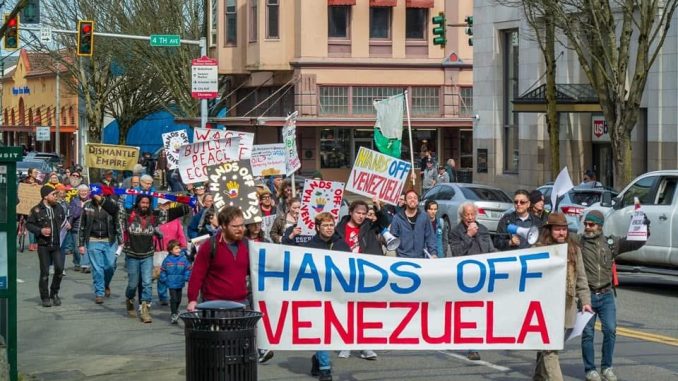
From Bus Driver to Kidnapped President
Nicolás Maduro was a city bus driver in Caracas. He drove people through the barrios, past shantytowns built on hillsides where families lived in “Casas de Cartón”, referring to the houses of cardboard & tin roofs, made famous by Venezuelan singer-songwriter Alí Primera.^1 Maduro wasn’t born into wealth or a political dynasty. He didn’t go to Harvard or Yale. He rose as a worker than a representative through the transit workers union into becoming a leader. When Hugo Chavez made his stunning debut in his 1992 failed military coup, Maduro recognized became hen a legislator, then foreign minister-and finally, after Hugo Chávez’s death, president of Venezuela.^2
I’m a school bus driver myself. I know what it means to be behind the wheel-responsible for lives, overlooked by the powerful, yet essential to the daily rhythm of society. So when I hear U.S. pundits call Maduro a “dictator,” I think: You’ve never met a real dictator. You’ve never met a man who came from nothing and dared to say no to empire.
In Venezuela, the American Dream still exists-not the hollow version sold in campaign ads, but the real one: that a poor kid can rise to lead a nation, not because they’re rich, but because they’re trusted by the people. The same is true of Cilia Flores, Venezuela’s First Lady and a National Assembly deputy-born in a rural village, raised by a single mother, she became the first woman Speaker of Venezuela’s Congress.^3 And of Chávez himself, born in a mud hut in Sabaneta, who rose through baseball scholarships and military school to become the most beloved leader in Latin American history.^4
This is the threat. Not chaos. Not dictatorship. But proof that another world is possible-one where oil wealth serves the many, not the few; where elections are transparent-you vote on a touchscreen, get a paper ballot, verify it with your own eyes, dip your pinky in indelible ink, and drop it in a public ballot box; where healthcare and education are rights, not commodities.^5
And so, on January 3, 2026, the United States bombed Caracas, stormed the presidential residence, and dragged President Maduro and First Lady Flores from their home. They were flown out on a U.S. warship and jailed in Brooklyn, charged as “narco-terrorists” in a New York courtroom-a charge even the DEA can’t substantiate, and one that echoes the same lies used to justify coups in Guatemala, Chile, and Iraq.^6
This wasn’t about drugs. It was about oil. About sovereignty. About silencing a living alternative.
Because while the U.S. tells its children, “Anyone can be president,” the truth is that in America, elections are decided by money.^7 In Venezuela, a bus driver became president-not by buying power, but by earning it.
And for that, he was kidnapped.
But dreams don’t die in cages. They ignite movements.
And Venezuela is still standing.
The Good Example Under Siege
We used to say Venezuela was the “threat of a good example”-and it was easier to say that when Hugo Chávez was alive. Back then, the world watched as a country redirected oil wealth to the barrios, eradicated illiteracy, built free community clinics, and housed the homeless. It wasn’t perfect, but it was real. And it worked-so well that Jimmy Carter called Venezuela’s electoral system “the best in the world.”^ 8 Not because of high-tech gimmicks, but because it was transparent: you voted on a touchscreen, got a paper ballot, verified it with your own eyes, dipped your pinky in ink, and dropped it in a box. No faith required-just sight, touch, and trust in your neighbors.
But that was before the siege.
Today, the “good example” isn’t about abundance-it’s about endurance. It’s about holding a nation together while the most powerful empire in history treats your country like its backyard and wages a ten-year war by other means. Venezuela’s economy has shrunk by nearly 80%—not because of mismanagement alone, but because the U.S. blocked insulin, seized dialysis supplies, froze $30 billion in assets, stole CITGO, and convinced the UK to lock away Venezuela’s gold.^9 This wasn’t policy failure. It was economic warfare.
And still, they held.
While the U.S. poured suitcases of cash into opposition groups, funded media blackouts, and trained armed gangs to burn buses and attack power stations, millions of Venezuelans kept showing up—to elections, to communal councils, to militia drills.^10 When Trump anointed Juan Guaidó-a man most Venezuelans had never heard of-as “president,” and the entire U.S. Congress gave him a standing ovation during the 2020 State of the Union, the people didn’t rise up in celebration. They rose up in defense.^11
Because the Venezuelan dream was never the American dream. The American dream sells the lie that anyone can become presidentif only they work hard enough, buy the right shoes, and ignore the billionaires who own the system. But in Venezuela, a city bus driver did become president-not by climbing a ladder rigged for the rich, but by earning the trust of the poor. And his wife, Cilia Flores-born in a rural village to a single mother—became First Lady and a National Assembly deputy, not through dynastic privilege, but through decades of grassroots organizing.^12
This is the dream that terrifies empire: not one of individual escape, but of collective ascent. It’s the dream Martin Luther King spoke of-“I have a dream”-echoed by Chávez in 2007 when he told the people of the United States, “We want to be your brother.”^13 It’s the dream of every nation crushed under the weight of U.S. sanctions, coups, and drone strikes: that another world is not only possible, but already being built, even in the darkest hour.
Now, with Maduro and Flores kidnapped and jailed in Brooklyn, some are starting to say “Madurismo”-a term he would reject, insisting always that he serves Chavismo, the legacy of Bolivar, and the will of the people. But perhaps “Madurismo” isn’t about personality. Maybe it’s about what happens when the dream is tested not in times of oil boom, but in blockade; not in victory, but in survival.
Venezuela today is the threat of a good example not because it offers prosperity, but because it refuses to disappear. While Libya was shattered, Iraq occupied, and Haiti strangled, Venezuela stands-battered, yes, but unbowed. Its communes feed neighborhoods, its militias guard the hills, and its elections-however maligned-still draw millions to the polls, not out of blind loyalty, but out of a stubborn belief that sovereignty matters more than comfort.
That’s the real threat. Not socialism. Not oil. But the idea that a small country in “America’s backyard” might choose its own path—and hold it, even as the empire rains bombs, bounties, and lies upon it.
And for that, they’ve been punished.
But they haven’t surrendered.
The Playbook: 25 Years of Hybrid Warfare
The United States didn’t wake up on January 3, 2026 and decide to bomb Caracas. That strike was the culmination of a quarter-century of sabotage-a playbook refined in Chile, Nicaragua, and Iraq, then deployed with ruthless precision against Venezuela.
It began in 2002. Just three years after Chávez won a landslide re-election, the CIA-backed opposition staged a coup. They kidnapped the president, declared a new government, and rolled out the red carpet for U.S diplomats. For 47 hours, Venezuela was theirs. Then something unexpected happened: millions poured into the streets. Soldiers refused orders. Pilots flew helicopters over the presidential palace shouting “¡Chávez, el pueblo está contigo!” And the people dragged their president back from exile. The coup collapsed-not because Washington lost interest, but because Venezuelans loved their democracy more than empire feared it.^14
So the U.S. switched tactics.
In 2002-2003, oil executives-many trained in U.S. universities-launched a “lockout” at PDVSA, sabotaging pumps, deleting data, and fleeing the country. They aimed to crash the economy and force Chávez out. The damage was catastrophic: $20 billion in losses, fuel shortages, hospitals running on generators. But instead of surrendering, Venezuela rebuilt its oil industry from scratch-with Cuban engineers, community volunteers, and workers who had never seen a refinery before. The U.S. learned a lesson: you can’t starve a revolution that grows its own food.^15
Then came the long siege.
Sanctions-first targeted, then total-blocked access to medicine, spare parts, and credit. By 2018, independent studies estimated 40,000 deaths from preventable causes: no insulin, no dialysis, no cancer drugs. The U.S. called it “pressure.” Venezuelans called it war. And still, they held elections-in 2018, 2020, 2024—each time with record turnout, despite power outages, internet blackouts, and armed gangs burning polling stations.^16 The opposition boycotted some, lost others, and when they couldn’t win, they invented a president.
Enter Juan Guaidó.
In 2019, a little-known legislator with ties to USAID-funded NGOs declared himself “interim president.” Trump recognized him within minutes. The entire U.S. Congress-Democrats and Republicans-gave him a standing ovation during the 2020 State of the Union. CNN ran his photo like he was already in Miraflores. But in Venezuela? Most people asked, “Juan who?” When Guaidó tried to rally crowds, he got dozens. When Maduro called for elections, millions showed up.^17
Undeterred, the U.S. escalated.
Assassination attempts followed: drones rigged with C-4 flown over military parades, bounty offers for Maduro’s capture, naval attacks on fishing boats near La Guaira. The CIA ran sabotage units from Colombia, arming far-right gangs to burn buses, attack power grids, and terrorize barrios.^18 All while U.S. media recycled the same script: authoritarian, illegitimate, dictator-never mentioning that U.S. elections are decided by billionaires, or that Venezuela’s system lets ordinary people audit every vote.
And through it all, one truth remained: the U.S. doesn’t fear dictators. It fears democracies that serve their people.
Because when a bus driver becomes president, when a rural girl becomes First Lady, when oil wealth builds clinics instead of offshore accounts-that’s not just politics. It’s prophecy. It’s proof that another world is possible. And that is intolerable to an empire built on extraction, hierarchy, and control.
So they kept tightening the noose-until January 3, 2026, when they dropped the pretense entirely.
Bombs fell. Homes were raided. A sitting head of state was kidnapped and jailed in Brooklyn. Not for crimes-but for refusing to sell his country.
This wasn’t madness. It was method.
Twenty-five years of hybrid warfare-coups, sanctions, lies, assassinations-had failed to break Venezuela. So empire chose the final option: open invasion.
But even now, the playbook is exposed. And the world is watching.
January 3, 2026: Open Colonialism.
On January 3, 2026, the United States bombed Caracas. It struck Fuerte Tiuna, La Guaira port, radar installations across the capital-and then sent special forces into the presidential residence to drag President Nicolás Maduro and First Lady Cilia Flores from their home. They were flown out on a U.S. warship, jailed in Brooklyn, and charged as “narco-terrorists” in a New York courtroom.^19
This was not a covert operation gone rogue. It was empire stripped bare.
Within days, the Treasury Department announced that $500 million in Venezuelan oil sales would be deposited in U.S.-controlled accounts in Qatar. Commodities giants Vitol and Trafigura-licensed by Washington-began moving 4.8 million barrels of crude to Caribbean hubs. And the White House issued an executive order shielding these stolen revenues from any creditor, including Venezuela itself.^20
The message was clear: the U.S. would now run Venezuela’s oil industry indefinitely. Only American companies would be allowed to sell diluents back to PDVSA. Only U.S. manufacturers could supply Venezuela’s hospitals and power grid. Chinese tankers? Turned back at sea. Russian partners? Told their assets might be seized. This wasn’t diplomacy—it was colonial extraction with digital ledgers and Pentagon branding.^21
And the justification? The same old lie recycled for Iraq, Libya, and Syria: He’s a drug kingpin. Never mind that the DEA and UN have long classified Venezuela as a marginal player in global narcotics trafficking.^22 Never mind that Maduro was democratically re-elected in 2024, that his government activated 4.5 million civilian militias to defend national sovereignty, that polls consistently show majority support even amid hardship.^23 None of that matters when you’re sitting on the world’s largest proven oil reserves-303 billion barrels-and you refuse to hand them over to Exxon and ConocoPhillips.^24
The kidnapping of a sitting head of state is a crime against international law. It’s also a confession. After decades of sanctions failed to break Chavismo, after Venezuela stabilized its economy and deepened ties with China, Russia, and Iran, Washington chose naked force. Not because Venezuela is weak-but because it dared to succeed on its own terms.
This is what they’ve always feared: a country that redistributes oil wealth to the poor instead of foreign shareholders, that builds free healthcare and literacy campaigns while rejecting IMF diktats, that says no to privatization and yes to communal power.
Venezuela is not a threat because it collapsed. It’s a threat because it didn’t.
And so, on January 3, empire showed its face: not as liberator, not as democracy promoter, but as thief, jailer, and invader. The mask is off. What remains is the choice: complicity-or solidarity.
The Left’s Betrayal-and the Cost
I’ve been called a “Maduro lover.” A “dictator apologist.” An authoritarian for daring to say: the U.S. has no right to overthrow Venezuela’s government.
But here’s what they never ask: Why would a school bus driver-from Washington State, not Caracas-stand with Maduro?
Because I’ve been there. I saw Chávez speak in 2009. I walked through barrios where people told me, for the first time, they had doctors, literacy classes, and hope. I witnessed an election where you voted on a touchscreen, got a paper ballot, verified it with your own eyes, dipped your pinky in ink, and dropped it in a box. No faith required-just transparency. Jimmy Carter called it “the best electoral system in the world.” I agree. It’s certainly better than the U.S., where elections go to the highest bidder.^25
Yet when the U.S. bombed Caracas on January 3, 2026, kidnapped Madur and Cilia Flores, and seized $500 million in oil sales, much of the Western left stayed silent-or worse, repeated the script.
They call Maduro a “dictator” while ignoring that he was democratically re-elected in 2024, that millions activated in militias to defend national sovereignty, and that polls-even those cited by opposition-aligned outlets-show majority support for his government.^26 They parrot “authoritarian drift” while overlooking that the real authoritarianism is a foreign power bombing a capital, jailing a head of state, and dictating who can buy Venezuela’s oil.
This isn’t analysis. It’s complicity dressed as moral superiority.
The U.S. left has become perfect-and the enemy of the good. It demands ideological purity from nations under siege while giving empire a pass on its crimes. It amplifies tiny, USAID-funded opposition factions while dismissing millions in Chavista communes who feed their neighbors, run community clinics, and now guard their hills with rifles against invasion.
Worst of all, it repeats the oldest trick in the imperial playbook: demonize the leader, infantilize the people.
Sound familiar? It’s the same line used before Iraq, Libya, Syria. Saddam was a monster. Gaddafi was insane.
Assad gassed his own people. And now: Maduro is a narco-terrorist. Never mind that the DEA and UN consistently rank Venezuela as a marginal player in global drug trafficking.^27 Never mind that the “narco-terrorism” charges were filed in a New York court days after U.S. bombs hit Fuerte Tiuna-a clear act of war disguised as law enforcement.^28
And never mind that the Venezuelan dream isn’t the American dream.
The American dream sells individual escape: work hard, get rich, leave the poor behind. The Venezuelan dream-forged by Bolivar, revived by Chávez, defended by Maduro-is collective ascent. It says a city bus driver can become president not by buying power, but by earning the trust of the people. It says oil wealth belongs to the many, not the few. It says sovereignty matters more than comfort.
That’s the threat. Not chaos. Not dictatorship. But proof that another world is possible-even under siege.
So when the left abandons Venezuela, it doesn’t just betray a nation. It betrays the very idea that ordinary people can govern themselves without permission from Washington or Wall Street. It surrenders the future to empire.
Solidarity isn’t about whether Maduro is flawless. It’s about recognizing that the greatest threat to democracy isn’t a flawed leader—it’s a foreign power that bombs elections, steals assets, and kidnaps presidents.
If we can’t defend Venezuela now-when U.S. warships blockade its ports, when its president sits in a Brooklyn jail, when its oil is sold in Qatar under U.S. control—then what does “anti-imperialism” even mean?
Nothing. It means nothing.
And that’s the real betrayal.
Conclusion: Defend Venezuela-Defend the Future
I’m a school bus driver in Washington State. Every morning, I turn the key, check the mirrors, and drive children to school. It’s honest work. It’s essential work. And it’s invisible work-until something goes wrong.
Nicolás Maduro was a city bus driver in Caracas. He drove buses through the barrios, past homes made of scrap metal and hope. He didn’t come from money. He didn’t go to elite schools. He rose through the ranks of his union, then his party, then his nation-not because he bought power, but because millions trusted him with it.
That’s the threat.
Not chaos. Not dictatorship. But proof that another world is possible—one where leadership emerges from the people, not billionaire donors; where oil wealth serves clinics and classrooms, not offshore accounts; where sovereignty matters more than comfort.
The U.S. doesn’t fear dictators. It fears democracies that serve their people.
And so, on January 3, 2026, it bombed Caracas, stormed the presidential residence, and dragged Maduro and First Lady Cilia Flores—born in a rural village to a single mother, now a National Assembly deputy—from their home. They were flown to a Brooklyn jail and charged as “narco-terrorists”—a lie even the DEA can’t substantiate.
But dreams don’t die in cages.
Today, Acting President Delcy Rodríguez leads a nation under siege. Her father was tortured to death by Venezuela’s old regime for daring to organize workers. Now his daughter defends the Bolivarian Revolution against a new imperial assault. She vows to prioritize social spending, reactivate communes, and maintain Venezuela’s “diversified economic and geopolitical relations”—even as the U.S. seizes tankers, blocks Chinese ships, and deposits $500 million in oil sales into Qatari accounts it controls.
Brazil has already sent medical aid to replace supplies destroyed in the U.S. bombing of La Guaira’s health warehouses. Over 420 scholars worldwide have signed a statement condemning the kidnapping as a “flagrant violation of the UN Charter.” And millions of Venezuelans—poor, working-class, Indigenous, Afro-Venezuelan—have taken up arms not for a party, but for sovereignty.
This isn’t just Venezuela’s fight. It’s ours.
Because if empire can kidnap a sitting president for refusing to privatize oil, what stops it from coming for any nation that dares to choose its own path? If the U.S. can declare it will “run Venezuela” indefinitely, who’s next? Cuba? Nicaragua? Brazil?
The Venezuelan dream was never the American dream—the myth of individual escape, of rags to riches in a system rigged for the rich. The Venezuelan dream is the Martin Luther King dream: “I have a dream.” It’s the Chávez dream: “We want to be your brother.” It’s the dream of every nation crushed under the weight of U.S. sanctions, coups, and drone strikes: that another world is not only possible—but already being built, even in the darkest hour.
Venezuela today is the threat of a good example not because it offers abundance, but because it refuses to disappear. While Libya was shattered, Iraq occupied, and Haiti strangled, Venezuela stands—battered, yes, but unbowed. Its communes feed neighborhoods. Its militias guard the hills. Its people still vote, still organize, still believe.
That’s the real threat. Not socialism. Not oil. But the idea that a small country in “America’s backyard” might choose its own path—and hold it, even as the empire rains bombs, bounties, and lies upon it.
So we must act.
Demand the immediate release of President Maduro and First Lady Flores.
Demand the return of CITGO, Venezuela’s gold reserves, and all stolen assets.
Demand an end to the naval blockade, the sanctions, the sabotage.
Demand that the U.S. stop playing god with other people’s lives.
And above all, reject the lie that solidarity requires purity. We don’t defend Venezuela because it’s perfect. We defend it because it’s theirs.
As Chávez told the U.S. people in 2007: “I have a dream.”
It’s time we dreamed with him.
Citations List
- Venezuelanalysis – “US attack Venezuela Maduro” (Jan 3, 2026).
https://venezuelanalysis.com/2026/01/us-attack-venezuela-maduro/ - Venezuelanalysis – “Venezuelan, International Popular Movements Condemn US Bombings, Maduro Kidnapping” (Jan 3, 2026).
- Venezuelanalysis – “The Kidnapping of Nicolás Maduro” (Jan 8, 2026).
- Venezuelanalysis – “Four Observations on the US Kidnapping of Nicolás Maduro” (Jan 8, 2026).
- Venezuelanalysis – “Trump–Rodríguez Oil Talks Test Venezuela’s Sovereignty” (Jan 15, 2026).
- Venezuelanalysis – “Acting President Rodríguez Announces Oil Reform as US Reports Venezuelan Crude Sales” (Jan 15, 2026).
- Venezuelanalysis – “Chinese Supertankers Turn Back as US Moves Ahead to Extort Venezuelan Crude” (Jan 14, 2026).
- Venezuelanalysis – “US Officials Vow to Control Venezuelan Oil Sales, PDVSA Confirms Negotiations”(Jan 7, 2026).
- Venezuelanalysis – “International Academic Statement Against US Bombing of Venezuela and Kidnapping of President Maduro” (Jan 16, 2026).
Includes full list of 420 signatories. - Venezuelanalysis – “Who Is Really Running Venezuela?” (Jan 10, 2026).
Details Delcy Rodríguez’s background, including her father’s torture and death. - Venezuelanalysis – “Venezuela: Latin American Countries Jointly Condemn US Attacks as Interim Gov’t Backs Maduro” (Jan 4, 2026).
- Venezuelanalysis – “Venezuela: Brazil to Send Medical Aid Following US Bombings” (Jan 6, 2026).
- Carter Center – Venezuela Electoral Mission Reports (2005, 2012).
https://www.cartercenter.org/countries/venezuela.html - Democracy Now! – “Former U.S. President Jimmy Carter on Venezuela’s Election Process” (Sept 21, 2005).
https://www.democracynow.org/2005/9/21/former_us_president_jimmy_carter_on - Weisbrot, M. & Sachs, J. – “Economic Sanctions as Collective Punishment: The Case of Venezuela”(CEPR, April 2019).
https://cepr.net/report/economic-sanctions-as-collective-punishment-the-case-of-venezuela/ - UN Office on Drugs and Crime (UNODC) – World Drug Report (multiple years).
https://www.unodc.org/unodc/en/data-and-analysis/world-drug-report.html - WOLA – “Venezuela and the U.S. War on Drugs” (2020).
https://www.wola.org/analysis/venezuela-and-the-u-s-war-on-drugs/ - National Security Archive – “Venezuela Coup Attempt, 2002” (2004, updated 2019).
https://nsarchive.gwu.edu/briefing-book/venezuela/2019-04-12/venezuela-coup-2002 - Corrales, J. & Penfold, M. – Dragon in the Tropics: Hugo Chávez and the Political Economy of Revolution in Venezuela (Brookings Institution Press, 2015).
- BBC News – “Venezuela drone attack: What we know” (Aug 5, 2018).
https://www.bbc.com/news/world-latin-america-45200005 - Chávez, Hugo – Speech at UN General Assembly (Sept 20, 2006).
Full transcript/video via UN Web TV: https://media.un.org/en/asset/k1l/k1ljf1r3qj - White House – “National Security Strategy of the United States” (2025).
Cited in Venezuelanalysis reporting on Trump’s “Donroe Doctrine.” - Reuters – “How Russia sank billions of dollars into Venezuelan quicksand” (Mar 14, 2019).
https://www.reuters.com/investigates/special-report/venezuela-russia-rosneft/ - Politico – “Trump’s attack on Venezuela could change the world. Here’s how.” (Jan 4, 2026).
- CEPAL/ECLAC – “Balance Preliminar de las Economías de América Latina y el Caribe 2025”.
Confirms Venezuela’s GDP contraction (~80% from 2013–2020) and recent recovery. - C-SPAN – “President Trump Delivers 2020 State of the Union Address” (Feb 4, 2020).
Shows bipartisan standing ovation for Juan Guaidó.
https://www.c-span.org/video/?468977-1/president-trump-delivers-2020-state-union-address - Anti-Imperialist Scholars Collective – “The Terms of Struggle in Venezuela: Imperialism vs Sovereignty” (Jan 12, 2026).
https://venezuelanalysis.com/2026/01/the-terms-of-struggle-in-venezuela-imperialism-vs-sovereignty/ - Tricontinental Institute – “The Kidnapping of Venezuela’s Sovereignty” (Jan 13, 2026).
https://venezuelanalysis.com/2026/01/the-kidnapping-of-venezuelas-sovereignty/
Be the first to comment